He did it long before TikTokers: Bob Ross set himself up with an easel and broadcast his painting for people to behold in real time. As I kid I’d watch him on PBS. I wasn’t watching for his technique. Like many people I found his painting hypnotic and satisfying: as he applied his brushstrokes, I felt marvel right alongside him when “happy little trees” magically appeared. His steady, confident, and warm voice reassured something elemental in me.
Contrast that with me now. Many days at the easel, I’m squinting at the canvas with my brush hovering uncertainly. My mind races, terror and frustration meeting a deep undercurrent of inevitability. Is this failure?! Should anyone (…Wes) dare to interrupt me in these moments, I bark. I absolutely do not (typically) record my painting or, god forbid, broadcast it live/timelapse it into neat little social media ready clips. I repeat little dumb mantras to myself to try – try! – to access something ephemeral I can only describe as “flow”, a fickle state of mind that shows up sometimes and then ghosts me for weeks after. I can I can I can.
I write all of that as a healthy dose of hyperbole. Painting’s not actually quite as bad as that – at least not all the time! – but for me, it’s a whole lot different than it seemed watching Bob. For me, creating is work. It requires my undivided attention and presence, a deep sense of confidence and calm that I am constantly working to tune and replenish, and the same discipline as focusing on my laptop on a task or getting through the uncomfortable part of exercise.
I have to coach myself through the hard parts to get to the good. And there are plenty of hard parts. I don’t always know if I’m going to finish a piece, but I have to trust that I will do it – a conflicting and scary sense of not knowing the end to the story while I’m still in it, but somehow convincing myself to “know” it’ll work out. Feel familiar?! I hope so!
I share this to help anyone who wonders why what they care deeply about doing still feels difficult or even, at times, unpleasant/unworthwhile. Isn’t that just life? It doesn’t show up “purely” one thing or another. Joyful times always carry something of an edge; grim experiences are often, horrifyingly, funny.
For me, I coach myself through the difficult parts of painting because the pursuit of those good moments and the final piece is worth it. In that way, a painting is an artificial creation of a life arc: spark/idea, littered with little fleeting moments of pure joy and awe, characterized by longer periods of buckling down and swells of anxiety, but ultimately and somewhat artificially, in retrospect, “completed” as one chapter in a longer series. Even that ending is bittersweet: it feels so good to look at a completed piece and know that it’s done, but there’s also always a lingering bit of wondering: was there more? What might I do differently next time? And, of course, given that I can’t help but be in my own never ending main-character syndrome of life: what’s next?
I doubt this only applies to painting. Anyone who creates – new projects, writing, event planning – is likely (hopefully!) familiar. From my perspective, I think it’s normal, and maybe even a sign of doing something worthwhile.
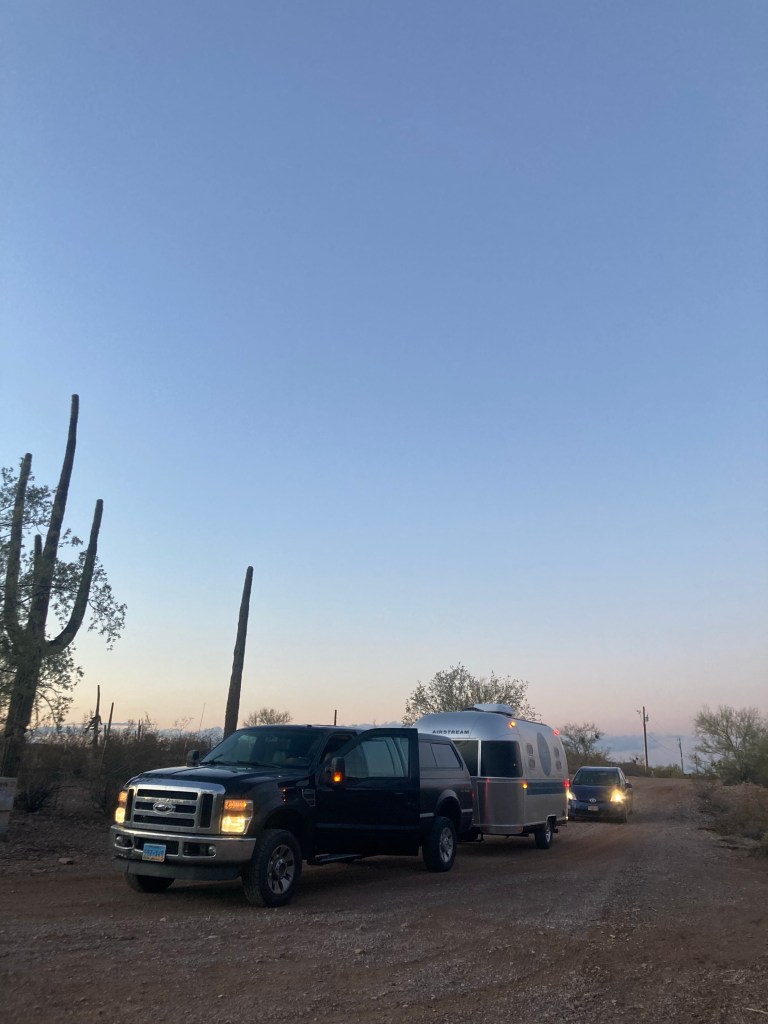
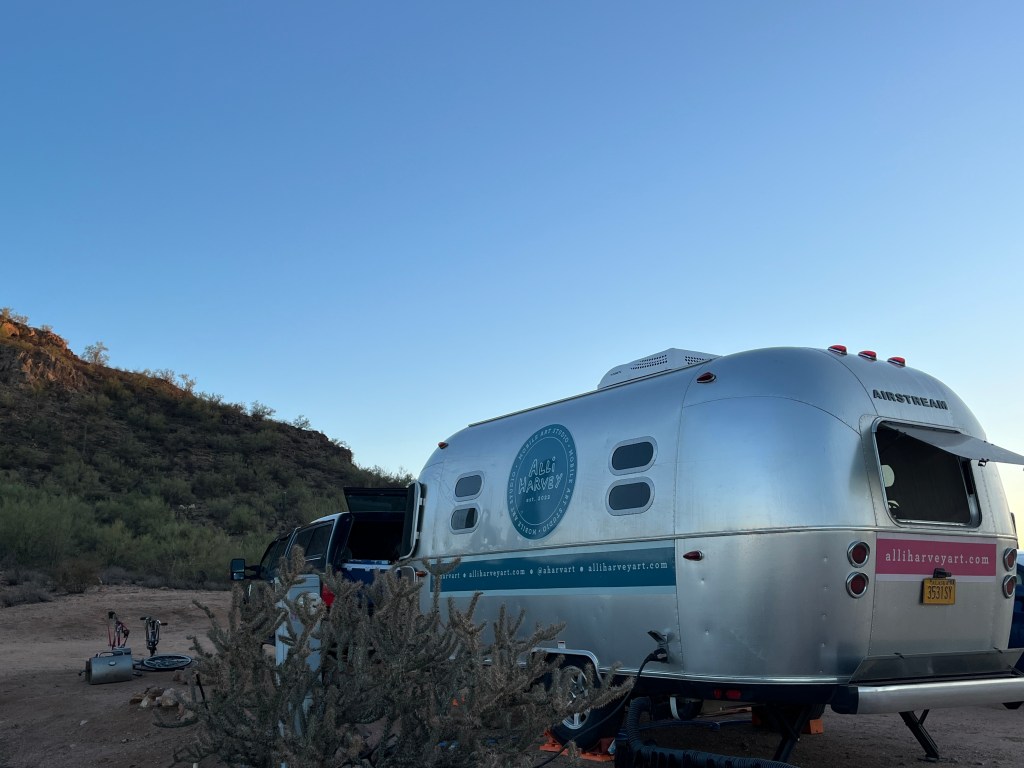
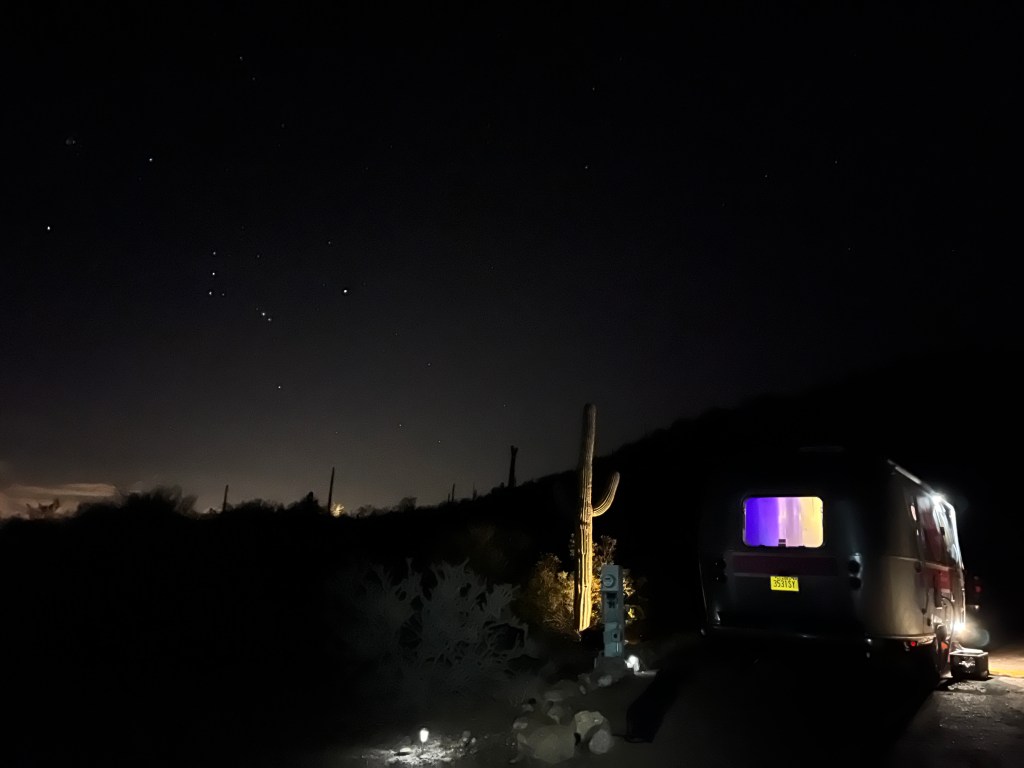
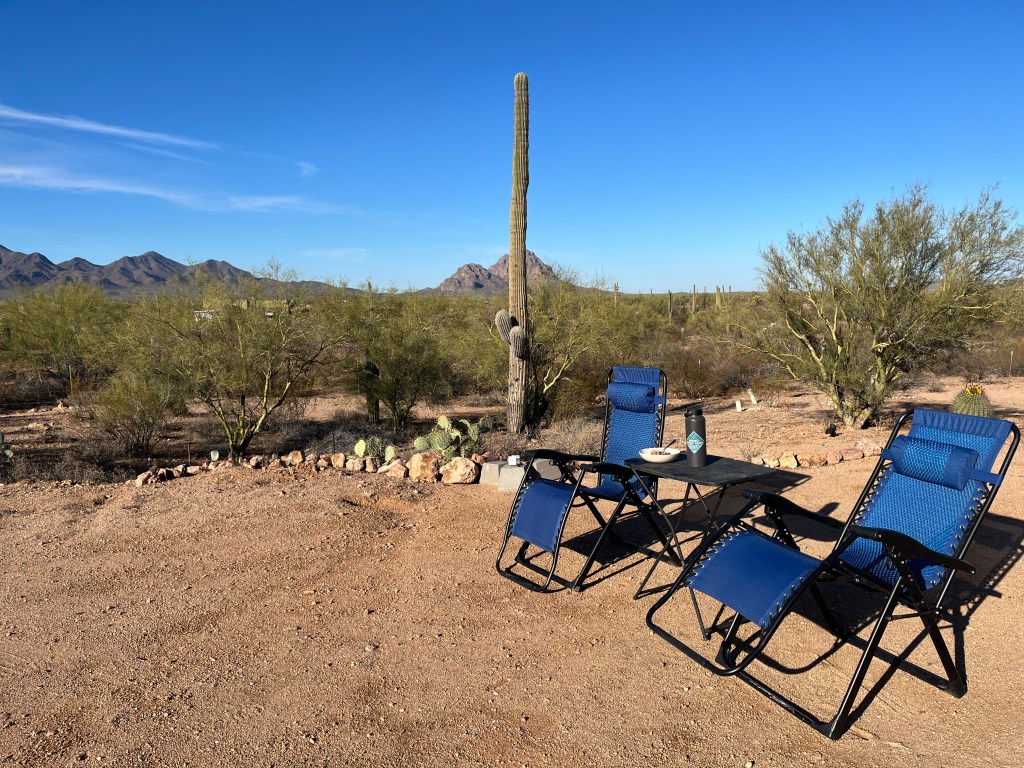
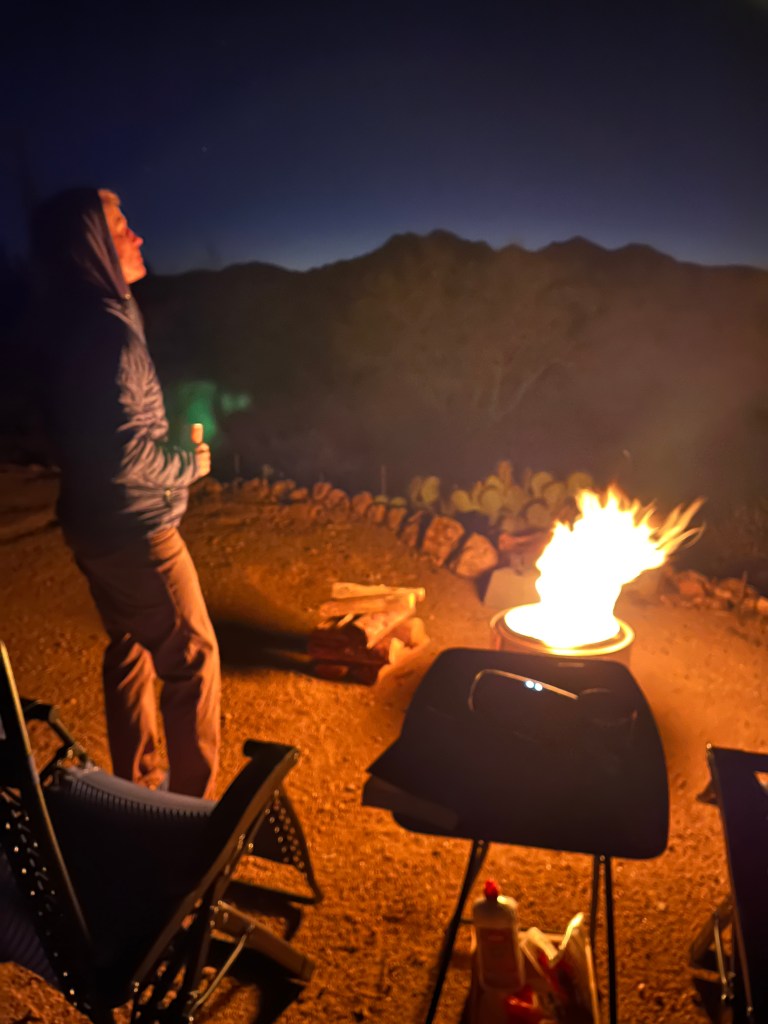
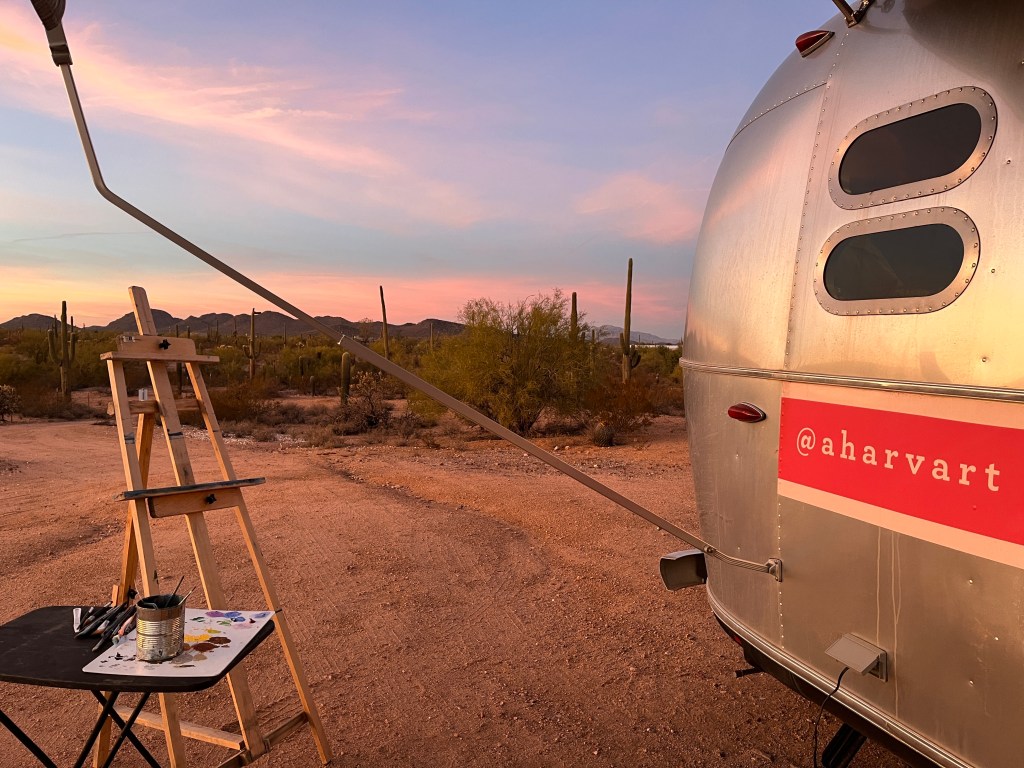
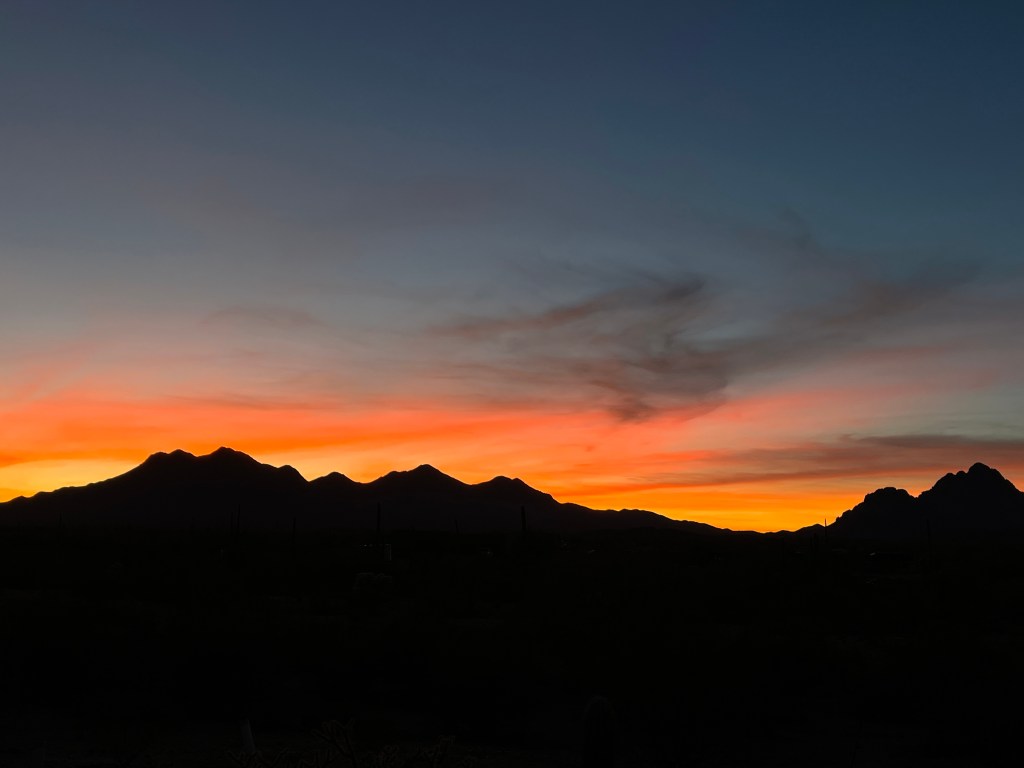
Sharing from my current work site, a gorgeous bigger context of the Sonoran Desert. When I imagined the Mobile Art Studio, this is what I had in mind. Even as art is work, having the opportunity to be so fully present and getting to know this place is giving me a whole lot of energy to draw on. I feel very, very lucky to be here! If anyone’s interested, we found this site on Hipcamp, kind of the Airbnb of camping. Happy to share more – message me.